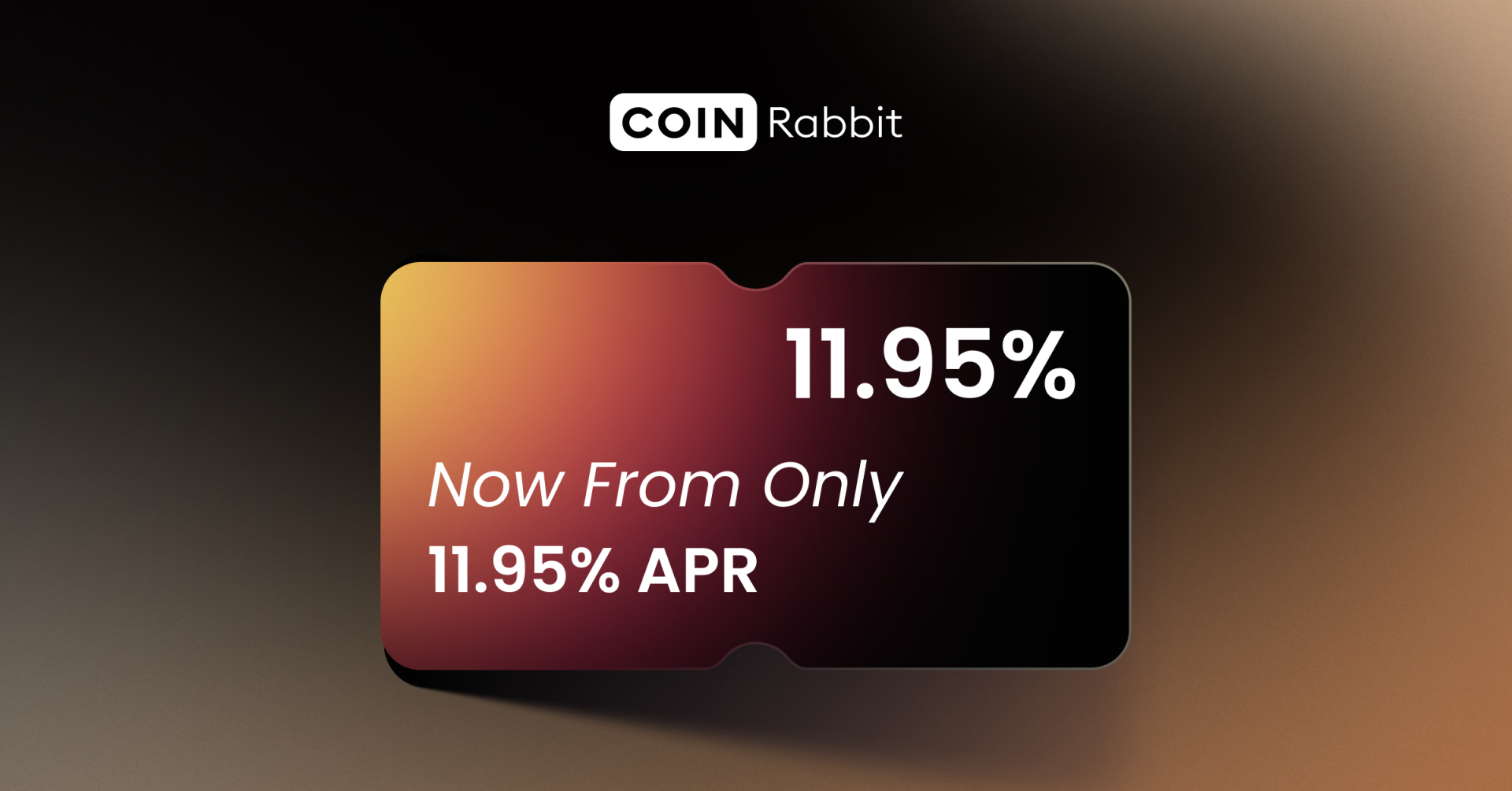
CoinRabbit announced a reduction in its crypto lending rates across XRP loans and more than 300 other supported assets on April 6, 2026, framing the change as part of its dedication to offering practical tools for capital preservation. Historically, CoinRabbit APR reflected prevailing market conditions starting around 17%; rates now start at 11.95%, with participants in CoinRabbit's Private Program able to access even lower custom rates tailored to their specific borrowing needs.
Why Borrowing Against Crypto Instead of Selling Matters Here
With prices fluctuating sharply, selling holdings can lock in losses and reduce future upside; borrowing against crypto instead lets users maintain portfolio exposure and access liquidity simultaneously. That core value proposition, keeping upside exposure while still accessing cash, is what crypto-backed lending offers over simply liquidating a position outright when funds are needed.
What Determines a Borrower's Final Rate
Final rates are determined by the loan-to-value (LTV) ratio, ranging from 50% to 90%, and the loan terms selected, with options for both fixed-term and open-ended loans. Walter Barrett, Chief Strategy and Growth Officer at CoinRabbit, said reducing rates is part of refining the platform's financial model to make lending more efficient across diverse portfolios, rather than a one-time promotional discount.
Understanding Liquidation LTV: The Key Risk Variable
A key aspect of risk management in lending is the liquidation LTV: the ratio of the loan amount to the collateral value at which a loan is automatically liquidated. On the broader market, standard liquidation LTV typically ranges from 78% to 83%, meaning positions are liquidated once collateral value drops to that level relative to the loan amount.
CoinRabbit's Two Distinct Liquidation Options
CoinRabbit provides two specific options: a standard 80% liquidation LTV, representing the standard across most platforms, and a 90-95% liquidation LTV for users seeking additional flexibility, since liquidation occurs later and provides a larger buffer for price drops. Using a worked example: an investor pledging $10,000 worth of XRP as collateral and borrowing $5,000 starts at a 50% initial LTV ratio. Under the 90-95% liquidation option, that position could be liquidated only if collateral value falls to $5,500; under the standard 80% option, the same position would be at risk of liquidation once collateral falls to $6,250, a meaningfully earlier liquidation trigger point.
How the Two Risk Approaches Actually Compare
The choice between these two liquidation LTV options ultimately depends on a user's experience level and preference: following the standard path at 80% liquidation LTV, familiar to users with some crypto lending experience, or opting for the more conservative 90-95% approach that delays liquidation and provides a larger cushion against price volatility, at the cost of the position technically carrying risk closer to full collateral value before triggering.
What Actually Happens as a Position Approaches Liquidation
Instant alerts are sent as collateral value approaches either liquidation threshold, giving borrowers time to adjust their positions, whether by adding collateral, repaying part of the loan, or taking other risk-management action before an automatic liquidation occurs.
How to Actually Take Out a Loan on CoinRabbit
The process involves choosing collateral, users can use XRP, BTC, and 300-plus other supported assets, then choosing loan terms with an LTV ratio ranging from 50% to 90%, and options for either short-term or open-ended loan structures depending on the borrower's specific liquidity needs and timeline.
Reduced borrowing costs on crypto-backed lending like this reflect the same capital-efficiency focus seen in Zircuit Finance's institutional yield platform, both aimed at making digital asset holdings work harder without requiring holders to sell their underlying positions.
Glossary
- Loan-to-value (LTV) ratio: The ratio of a loan amount to the value of the collateral backing it, used to assess lending risk.
- Liquidation LTV: The specific LTV threshold at which a lender automatically sells a borrower's collateral to recover the loan amount.
- Open-ended loan: A loan without a fixed repayment deadline, giving the borrower flexibility in choosing when to repay.
Disclaimer
Nothing in this article should be read as financial or investment advice; it is provided for informational purposes only. Crypto-backed loans carry liquidation risk if collateral value declines. Confirm current rates and terms directly through official CoinRabbit announcements.